Legs Up the Wall: Why This Simple Yoga Pose Is So Restorative for Your Heart, Nervous System, and Circulation
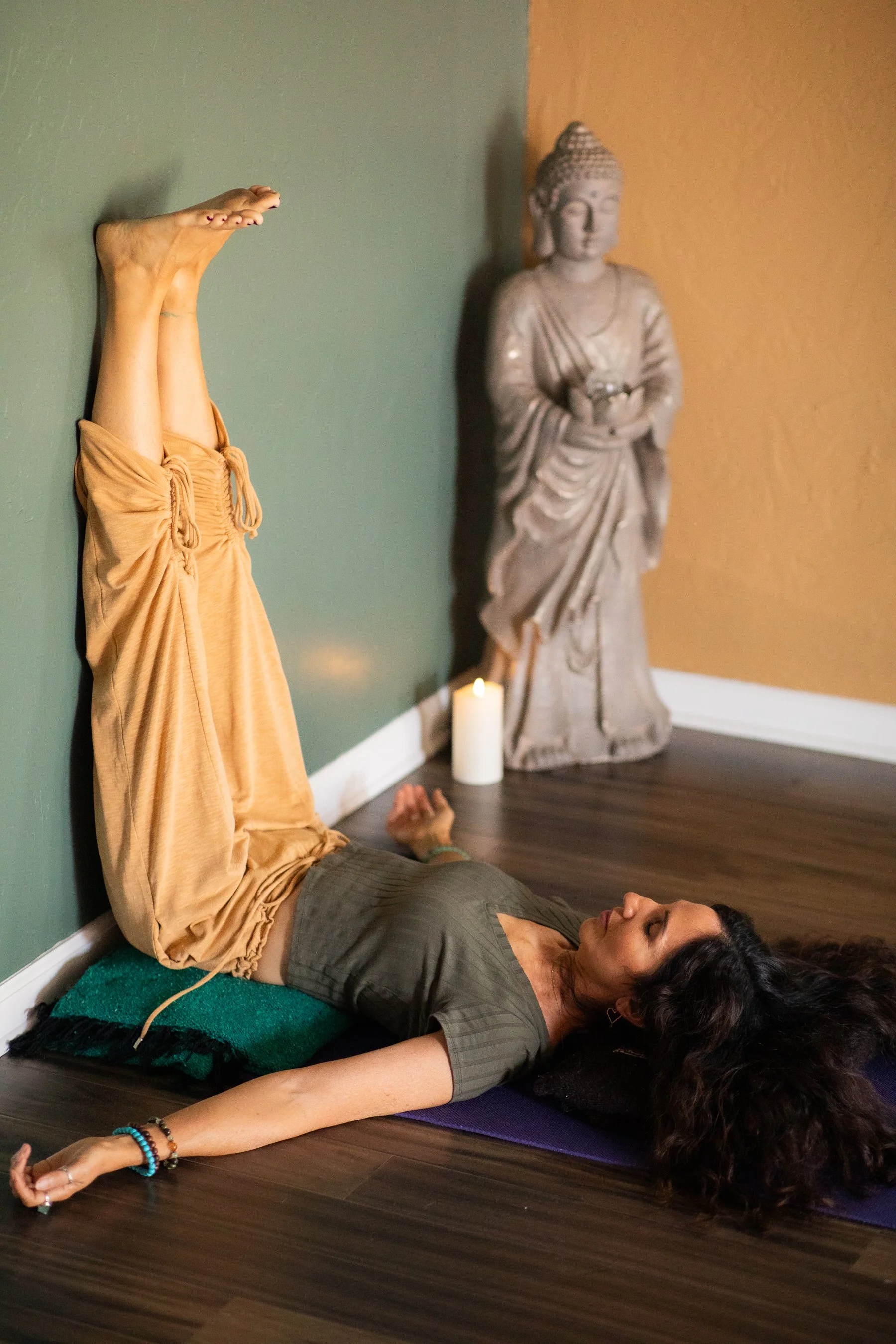
Your heart works tirelessly for you. Here's one simple way to support it.
One of the most restorative yoga poses I have shared throughout my years as a yoga therapist is Viparita Karani, commonly known as Legs Up the Wall. During my twenty years working with individuals living with heart disease in the Ornish Lifestyle Medicine Program, this gentle inversion quickly became one of the most requested restorative practices. People often described feeling calmer, lighter, and deeply relaxed after only a few minutes.
As both a Registered Nurse and Certified Yoga Therapist, I've always been fascinated that what feels like "simply resting" is actually creating meaningful physiological changes. This gentle pose supports circulation, encourages the nervous system to settle, and allows the body to move toward a state of balance and restoration.
What Does Viparita Karani Mean?
In Sanskrit, viparita means inverted, while karani means in action. Rather than requiring strength or effort, this gentle inversion allows gravity to become your ally. Instead of your heart working against gravity to return blood from your feet, gravity assists the movement of blood and lymph back toward the heart.
Sometimes doing less truly allows the body to do more.
How Legs Up the Wall Supports the Heart
One of the reasons this pose feels so calming begins with a fascinating part of our nervous system.
Inside the carotid arteries in your neck are specialized pressure sensors called baroreceptors. As blood gently redistributes during this mild inversion, these receptors signal the brain that circulation is adequate. The nervous system responds by increasing parasympathetic (rest-and-digest) activity while decreasing sympathetic (fight-or-flight) activity.
As a result, the heart rate may slow, breathing often becomes easier, and many people experience a profound sense of relaxation.
It's as if the body receives a simple message:
"You are safe. Your heart doesn't need to work so hard right now."
While Legs Up the Wall is not a treatment for heart disease or high blood pressure, it is a wonderful restorative practice that may support cardiovascular health by helping the body shift from chronic stress toward relaxation. Researchers are also becoming increasingly interested in blood pressure variability—how much blood pressure fluctuates throughout the day. A healthier nervous system is associated with more stable blood pressure regulation, and regular restorative yoga may help support this balance.
Improving Circulation and Reducing Leg Fatigue
Throughout the day, gravity encourages blood and fluid to collect in our legs. If you've spent hours standing, sitting, or traveling, you've likely experienced heavy, tired, or swollen legs.
By elevating the legs, gravity helps reverse this process, encouraging venous blood and lymphatic fluid to return toward the heart. This may help reduce pooling in the lower legs, ease mild swelling, and leave the legs feeling lighter and refreshed.
Over the years, I watched many participants in the Ornish Lifestyle Medicine Program arrive carrying the physical effects of stress and poor circulation. After spending time in this pose, I often noticed softer facial expressions, slower breathing, and a greater sense of ease. While everyone's experience was unique, Legs Up the Wall consistently became one of the most appreciated restorative practices.
A Gentle Reset for the Nervous System
Many of us spend much of the day in a sympathetic, or "fight-or-flight," state. Our muscles stay tense, breathing becomes shallow, and the heart works a little harder than it needs to.
Legs Up the Wall offers an opportunity to shift into the parasympathetic nervous system—the body's "rest-and-digest" response. As the breath slows and the body relaxes, we move closer to homeostasis, the body's natural state of balance.
Sometimes we don't realize how much tension we are carrying until we finally experience what it feels like to let it go.
The Throat Center
In yoga philosophy, Viparita Karani is often associated with Vishuddha, the throat chakra, which relates to communication, authenticity, and speaking our truth.
Traditional yoga teachings also suggest that gentle inversions nourish the thyroid gland through improved circulation. While modern research has not confirmed a direct effect on thyroid hormone function, many practitioners experience this pose as one that encourages a sense of balance, clarity, and openness.
How to Practice Legs Up the Wall
One of my favorite ways to enter the pose is slowly and mindfully.
Begin by sitting next to a wall with one hip close to it. Lower yourself onto your side, bend your knees, and gently roll onto your back as your legs come up the wall. Once you're comfortable, straighten your legs to a position that feels supportive rather than forced.
Allow your arms to rest comfortably by your sides or place one hand over your heart and one over your abdomen. Relax your jaw, soften your shoulders, and allow your breath to settle naturally.
Notice the sensation of gravity carrying blood and energy away from the feet. There is nothing to do. Simply receive.
If your hamstrings feel tight, move slightly farther away from the wall. You may also place a folded blanket beneath your hips for comfort. If you would like to remain in the pose for a longer period, resting your lower legs on a chair is an excellent alternative and often even more relaxing.
If you're new to the pose, begin with 3–5 minutes and gradually increase to 10–20 minutes as it feels comfortable.
As with any inversion, individuals with uncontrolled high blood pressure, glaucoma, certain eye conditions, recent stroke, blood clots, or other medical concerns should consult their healthcare provider before practicing.
A Heart-Centered Reflection
As you rest in the pose, place one hand gently over your heart.
Take a slow, comfortable breath.
Silently ask your heart:
"What do you need to be healthy and whole?"
Pause and simply listen.
Perhaps you notice a word.
An image.
A feeling.
Or perhaps only quiet.
Whatever arises is enough.
Allow your intention to form as though it is already true.
"I am calm."
"I am courageous."
"I am joy."
"I care for myself with compassion."
Your heart has been with you through every moment of your life.
May this simple practice become one small way of caring for it in return.
A Note from the Author
The information shared in this article is intended for educational purposes and is not a substitute for medical advice. Always consult your healthcare provider before beginning a new exercise or yoga practice, especially if you have a cardiovascular condition, glaucoma, recent surgery, or other medical concerns.
As a Registered Nurse and Certified Yoga Therapist, my goal is to bridge the wisdom of yoga with evidence-informed healthcare, helping you discover simple practices that support your body's natural capacity for healing and balance.
References & Resources
Cleveland Clinic. Benefits of Legs Up the Wall (Viparita Karani). Explains the restorative and circulatory benefits of the pose in an accessible, medically reviewed format.
Hegde, S., et al. (2024). Cardiovascular Effects of Yogic Practices and Inversions.Cureus. Reviews the physiological effects of yoga inversions, including cardiovascular responses and safety considerations.
American Heart Association. Resources on stress, blood pressure regulation, and the role of the autonomic nervous system in cardiovascular health.
Shaffer, F., & Ginsberg, J. (2017). An Overview of Heart Rate Variability Metrics and Norms.Frontiers in Public Health. A helpful overview of heart rate variability and autonomic nervous system regulation.
